Your Favourite Tea Might Not Be Tea: Tea Vs. Tisane
Posted on03/15/2017
by
The Tea Haus
Love0
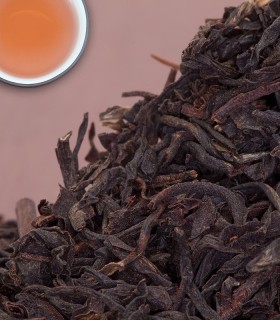
Your favourite tea may not really be tea. This is because many tea retailers call select beverages tea when in fact, they don’t contain tea leaves.
So what are they? What makes something tea and what makes something... not tea?
What is Tisane?
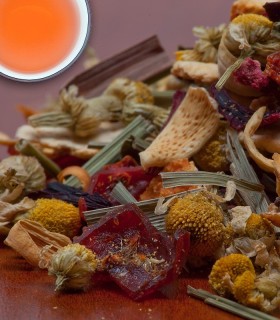
Technically, any fruit or herb can be steeped in water, ingested, and categorized as tisane. Tisane (tih-ZANN) is a french word for “herbal infusion” and is usually made with dried flowers, fruits, and herbs. The big difference is, that there are actually no tea leaves in tisanes. Tisanes are often mistaken for herbal teas or fruit teas. Take a closer look at one of the loose leaf “teas” you are enjoying. If this “tea” is composed of mostly fruit or various herbs it may be a tisane.
Herbal & Fruit Teas
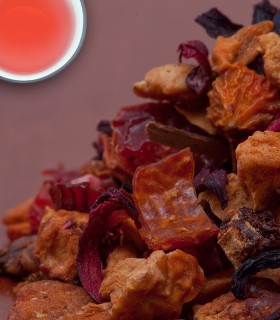
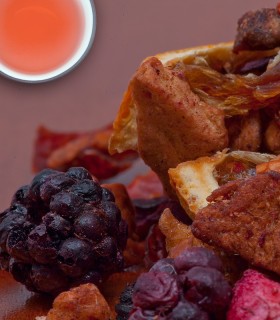
It turns out much of what the tea industry refers to as “fruit-teas” are really fruit-flavoured black teas. The true definition of a fruit tea is a tisane made from fruits and possibly the addition of herbs or spices. This means that traditional fruit tea is not really tea at all. At The Tea Haus we have several fruit tisanes including Canadian Cranberry, Elderberry, Camelito Blend, or our Fruit Explosion.
Types of Tisanes
Tisanes come in many different forms. Below are a few examples of common tisanes. Do any of your favourite “teas” fall into one of these categories?
-
Leaf tisanes: lemon balm, mint, lemongrass and French verbena
-
Flower tisanes: rose, chamomile, hibiscus and lavender
-
Bark tisanes: cinnamon, slippery elm and black cherry bark
-
Root tisanes: ginger, echinacea and chicory
-
Fruit/berry tisane: raspberry, blueberry, peach and apple
-
Seed/spice tisanes: cardamom, caraway and fennel
Benefits of Tisane
Just like tea, tisane can provide benefits for your health. Due to the usual presence of dried fruits, tisanes are often high in antioxidants and some nutrients. Tisanes also have a history as a medicinal beverage and are often used as “detox teas”. Tisanes have strong flavours that are most often sweet and fruity. Tisanes are also de-caffeinated. This makes a tisane the perfect beverage for a kick of flavour without the spike of energy from more highly caffeinated beverages. Try a fruity tisane in the evening after dinner for a sweet yet calming cuppa.
References:
Goodwin, L (2016). Tisane/ Herbal Infusion Basics. The Spruce. Retrieved from https://www.thespruce.com/tisane-herbal-infusion-basics-766322